

Armenian Apostolic Holy Church
.avif)
Apostolic Origins and Global Communion
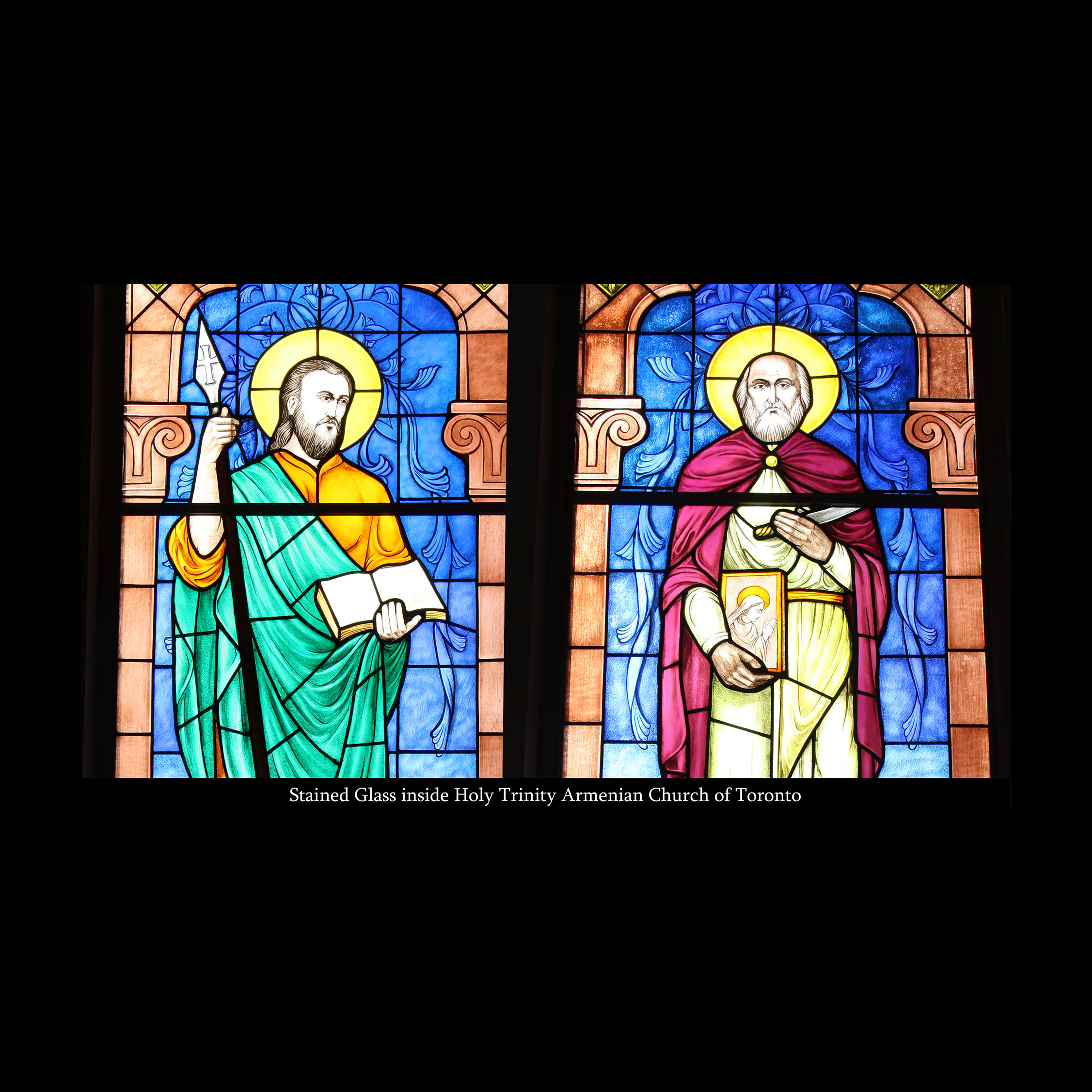
The Armenian Church belongs to the family of Ancient Eastern Orthodox Churches, founded in the 1st century through the preaching of two Apostles of Jesus Christ, St. Thaddeus and St. Bartholomew.
The Armenian Church is in communion with the Coptic, Assyrian, Indian Malankara and Ethiopian conformist Churches, having the same confession of faith and accepting the decisions of Nicaea in 325 AD, Constantinople in 381 and Ephesus Ecumenical Councils in 431 AD.

Adoption of Christianity in Armenia
In 301, Armenia became the first state to declare Christianity as the state religion, thanks to the pan-Christian saint, the first Armenian Patriarch St. Grigor the Illuminator’s preaching and Proclamation of King Trdat III.
For centuries, the Armenian Church has preserved and passed on the Orthodox faith from generation to generation, remaining faithful to the doctrine of the Lord Jesus Christ, the apostolic tradition and the teachings of the holy fathers.
The Four Pillars of the Church
The Armenian Church is one, because the founder of the Church, Lord Jesus Christ, is one, uniting the whole nation.
The Armenian Church is holy because the Lord Jesus Christ is holy.
The Armenian Church is apostolic, because it was founded directly as a result of the preaching of two apostles of the Lord, who ordained the first Armenian bishops.
The Armenian Church is Orthodox because it is the bearer of the true faith handed down from Christ to the apostles.
Leadership and Spiritual Center
The head of the Armenian Church is Jesus Christ, and the Supreme Patriarch and Catholicos of All Armenians is the spiritual leader of all Armenians both in Armenia and in the Diaspora.
The spiritual and administrative center of the Armenian Church is the Mother See of Holy Etchmiadzin, founded in 301-303 in Vagharshapat. For seventeen centuries, it faithfully fulfills its mission of saving souls and protecting the nation.


Global Structure and Diaspora History
The Armenian Apostolic Holy Church has church structures in many countries of the world: dioceses, delegations and communities. For centuries, due to historical events, particularly from the 90s of the 19th century to 1923, after the genocide, Armenian communities were created in different countries, and along with the population growth, there was a demand to have a church and a school and the need to establish them.
Mission and Educational Bodies
Under the guidance of the Catholicos of All Armenians, the mission of the Armenian Church is carried out with the support of the Mother See of Holy Etchmiadzin, the Hierarchical Sees, dioceses, delegations, parishes, as well as educational institutions, spiritual classes and the faithful.
Administrative Structure of the Church
1. Catholicosate of All Armenians (Mother See of Holy Etchmiadzin)
2. Catholicosate of the Great House of Cilicia (Antelias, Lebanon)
3. Armenian Patriarchate of Jerusalem
4. Armenian Patriarchate of Constantinople
5. Primates of the Diocese
6. Priests and Parishes
Spiritual Ranks
The primary spiritual ranks in the Armenian Apostolic Church, from lowest to highest, are Deacon, Priest, and Bishop, which form the basic hierarchy of the Holy Orders.
Deaconship
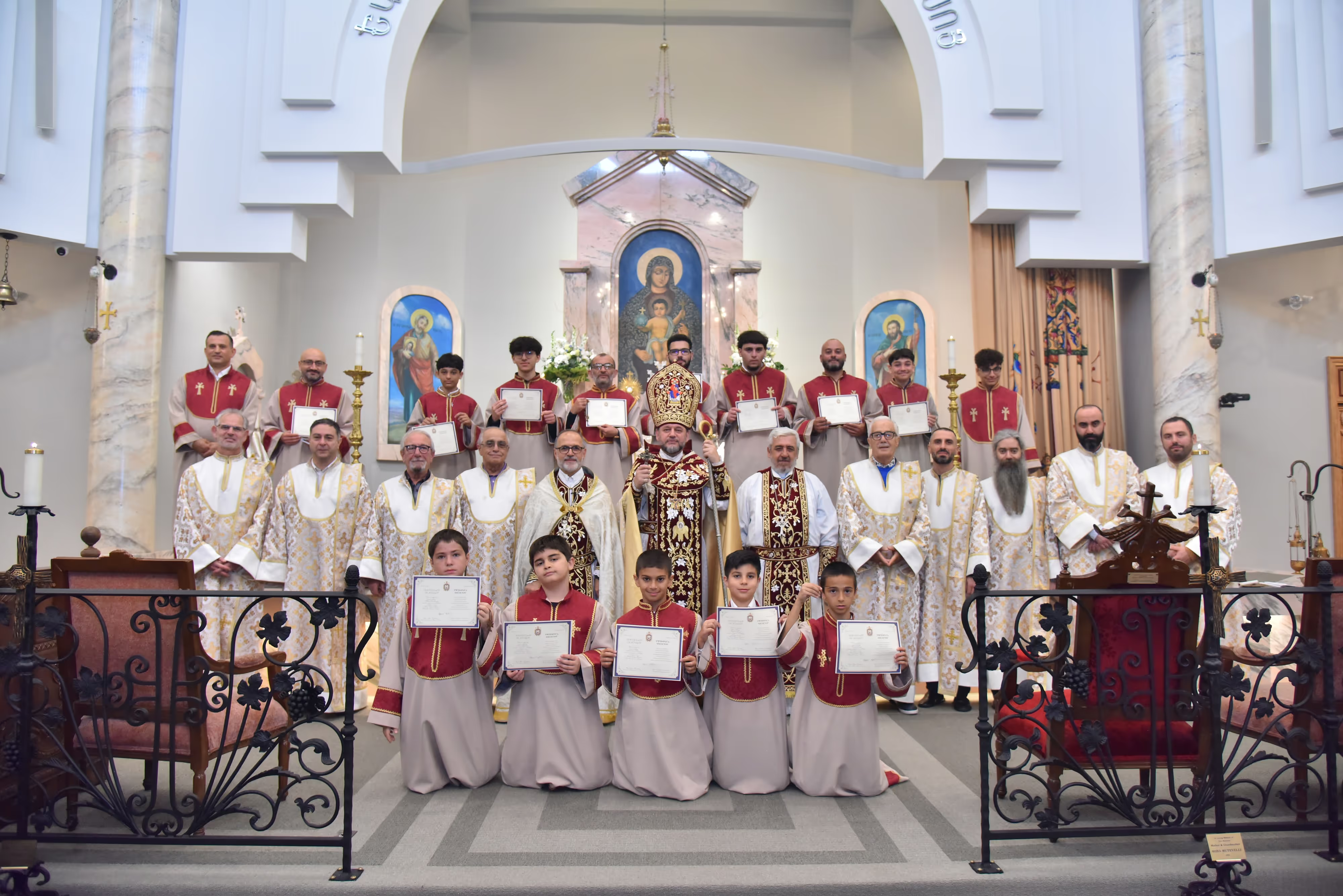
Deaconship is the first spiritual degree, which is conferred by the ordination during the Divine Liturgy. Deacons are mentioned in the Acts of the Apostles and in the apostolic papers. The first martyr of the Church is Stephen the Proto-Deacon. During the apostolic period, the duty of deacons was to take care of the needs of the needy of the community (deacon (Greek: diakon) means servant). Later, the deacons began to serve the Holy Table, to participate in the divine service. The deacon carries a orarion on his left shoulder as a sign of the sweet yoke of Christ.
Priesthood
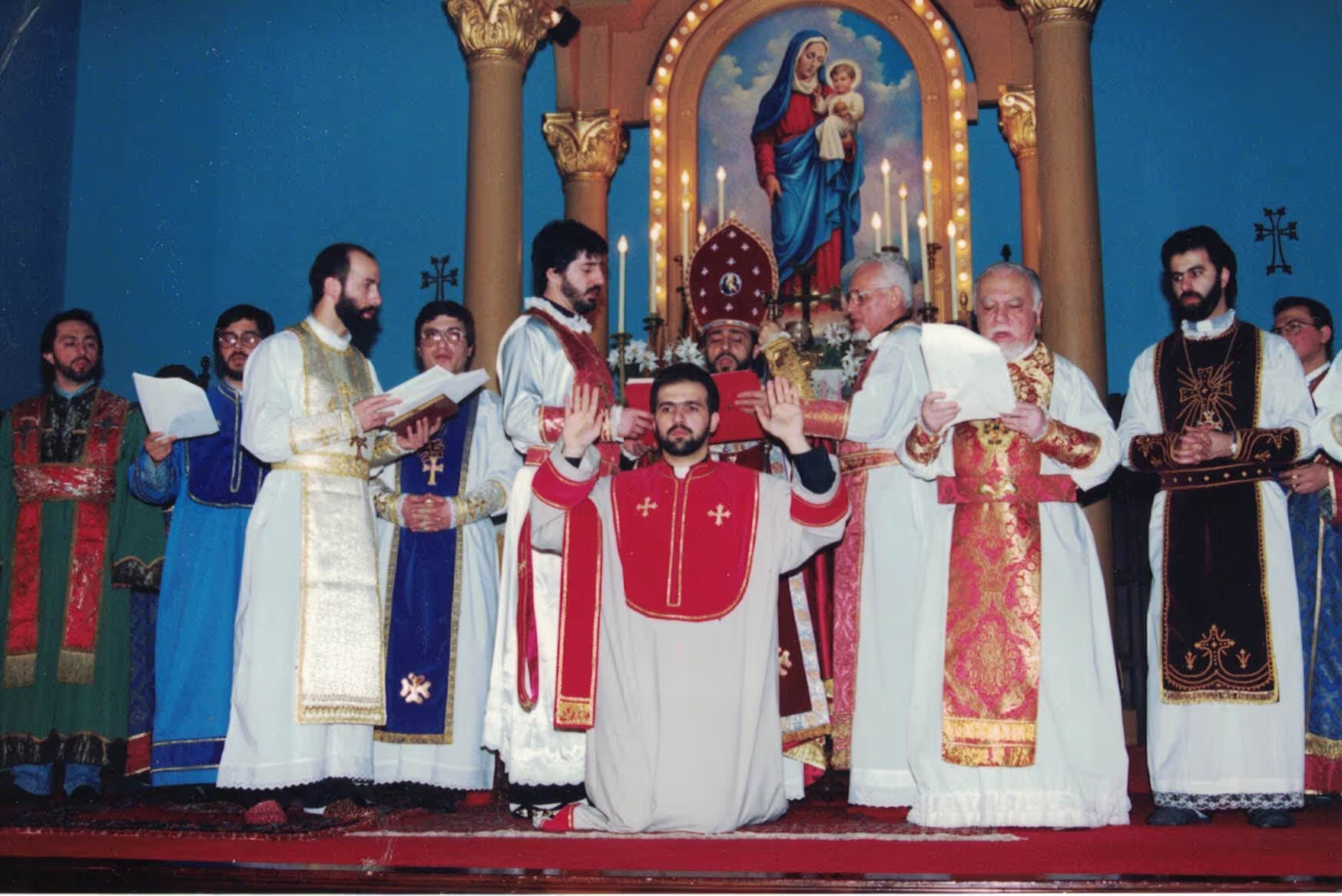
Priesthood is the next rank of Hierarchy. The Armenian Church has married and celibate clergy. Deacons receive priestly authority from the bishop during the Divine Liturgy, through ordination and anointing with Holy Muron. The priest receives the right to perform the sacraments of the Church, to offer liturgy and take care of the spiritual needs of the faithful. The Catholicos of All Armenians, in appreciation of service and merits, may grant the priest the right to wear a pectoral cross, a flowered cope, as well as the title of seniority. On the day of ordination to a celibate priest, during the Evening Service, a hood is given as a sign of renunciation of the world.
In the Armenian Church, celibate clergy can receive degrees of private and proto archimandrite doctrine. A cleric who has been awarded the degree of Archimandrite is given a doctrinal snake-headed staff during his ministry to preach the word of God with wisdom, to teach and preserve the Orthodox faith. The Catholicos of All Armenians also grants the Archimandrite the right to wear a pectoral cross.
Episcopacy (Bishop)
Episcopacy is the third degree of consecration of the Armenian Church. The bishop is the Dean of the Church and the Primate of the diocese, who has the right to confer, ordain, and consecrate churches. In the Armenian Church, the bishop is ordained and consecrated by the Catholicos. During the ordination, he is given a bishop’s scepter and ring as a sign of authority. Candidates for the episcopacy are chosen from celibate churchmen. Most meritorious bishops can also receive the honor of an Archbishop through the Pontifical Encyclical.
.avif)
Catholicos
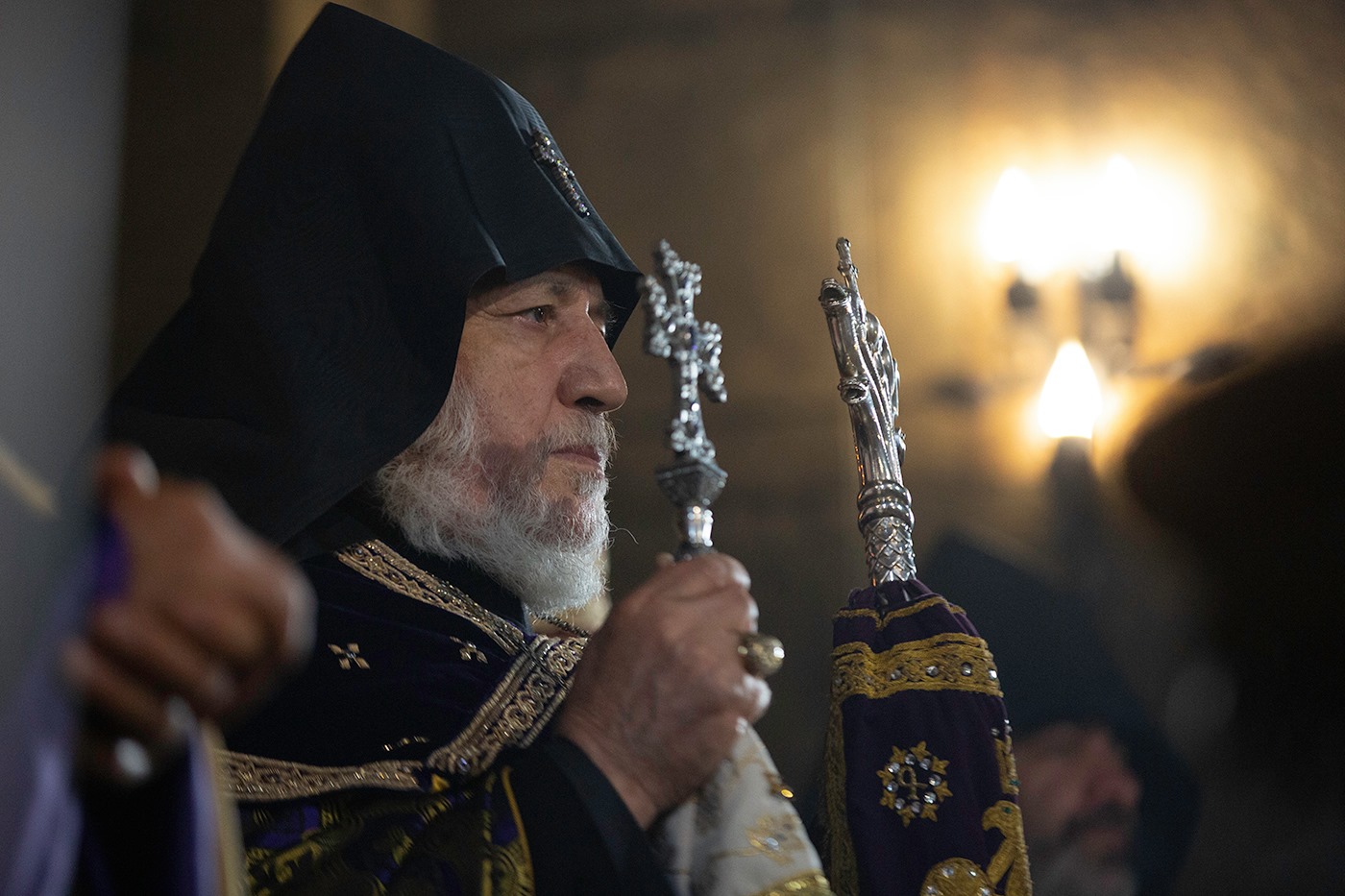
The Catholicos is the spiritual head of the Armenian Church, who is elected for life in the National-Church Assembly, ordained and consecrated by 12 bishops in the Mother See Cathedral.
The Catholicos of All Armenians is the Throne of the St. Thaddeus See, who embodies the highest authority of the Armenian Church. It is the right of the Patriarch of Armenia to bless with the Holy Muron, to ordain bishops, to lead the Armenian Church, deciding all issues related to the spiritual and administrative life of the Church.
Minor Clergy Ranks
In the Armenian Church, there are also humble acolytes ranks: reader, porter, torchbearer and oath taker, which are given by ordination.